People love the idea of perfect organization.
The right folder. The right category. The right project. The right tag. The right place to put every line the moment it appears.
It sounds clean. It sounds responsible. It sounds like the kind of system that should finally make everything feel under control.
In practice, it often makes capture slower than it needs to be.
The problem is not organization itself. The problem is asking for too much of it too early, right when the thought is still fragile and the work you are doing is still in motion.
Most useful text arrives before it is ready to be sorted
A lot of the text worth keeping does not show up with a label attached.
It shows up as:
- a question you need to ask later
- a task you do not want to forget
- a line from a page that matters for some reason you have not fully named yet
- three bullets for something you might write later
- a loose idea that belongs nowhere obvious yet
That is not a failure of the text. That is just what early-stage work looks like.
If your system insists that every one of those things be properly categorized before it can be saved, you have made the intake path too narrow.
The first job of capture is not to be elegant. It is to be easy enough that you actually use it.
Why people stop trusting over-organized systems
When a capture system becomes too demanding, people usually respond in one of two ways:
- they stop saving useful things because it feels like work
- they throw everything into a random pile and promise to fix it later
Neither outcome is really what they wanted.
They were aiming for clarity. They just got there through too much ceremony.
A good Inbox fixes that by lowering the price of saving something worth keeping.
An Inbox is not messy by default
Some people hear “Inbox” and imagine an endless heap they will never look at again.
That can happen, but it is not the point.
A useful Inbox is not a landfill. It is a temporary holding surface for text that needs to survive long enough to be sorted, shaped, or turned into something else.
The difference matters.
A landfill says: “I gave up.”
An Inbox says: “I am not done deciding what this is yet.”
Capture first, sort later is a real workflow
“Sort later” can sound suspiciously like procrastination if the system around it is weak.
But when the rest of the workflow is sane, it is actually what keeps the whole thing usable.
A healthy pattern often looks like this:
- capture the loose thing quickly
- let it land in Inbox without debate
- come back when you have enough context to know what it is
- turn it into a note, a task, a pinned project item, a snippet, or nothing at all
That is a much gentler demand than: “decide everything now.”
Inbox helps because it keeps organization shallow
One of the quieter benefits of an Inbox is that it protects you from building structure too early.
If the first answer is always “save it to Inbox,” then you only create extra destinations when they are clearly useful.
That leads to a better kind of organization:
- fewer categories
- more meaningful pinned notes
- less destination anxiety
- less admin in the moment of capture
In other words, the system stays lighter because the intake path is not trying to be the whole system.
What should leave Inbox
Not everything in Inbox has to become a polished note.
Some things will turn into active notes. Some will become tasks. Some will move into a pinned project note. Some will become snippets. Some will get copied into a handoff packet. Some will get deleted because they only mattered for an hour.
That is healthy.
Inbox is not there to prove everything was important. It is there to keep useful raw material available long enough for the next decision to happen.
How this shows up in Root
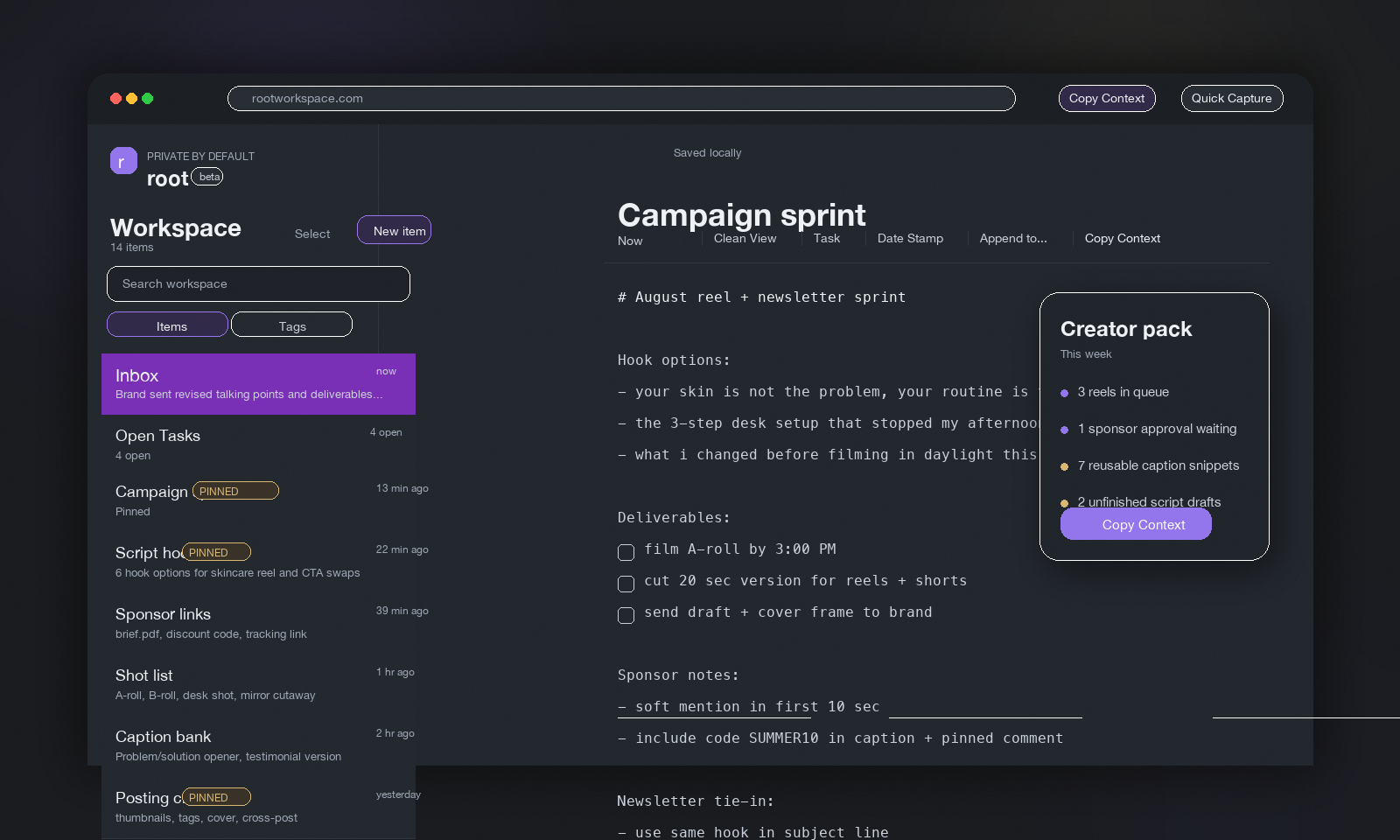
In Root, Inbox sits at the top on purpose.
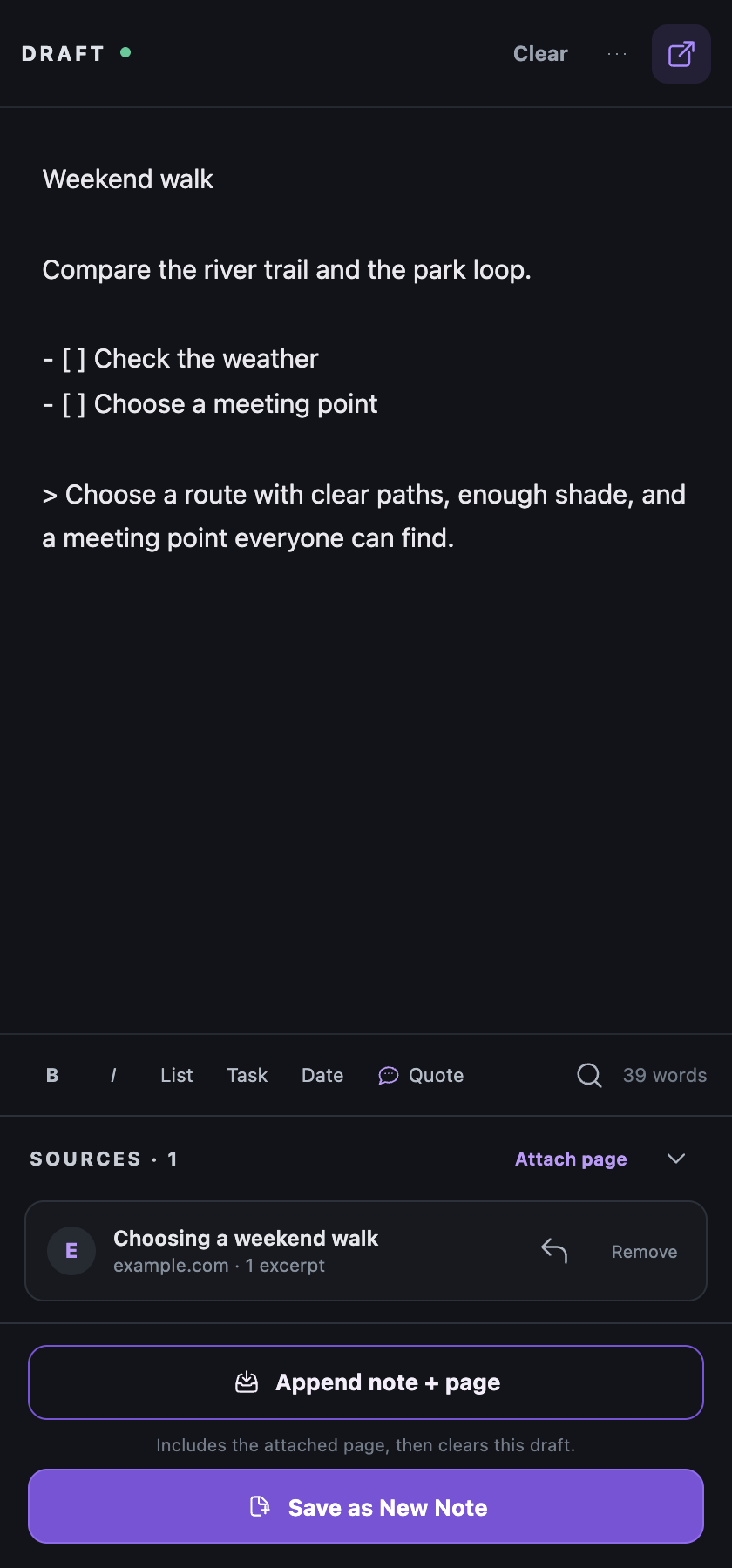
Research Draft can append its text and sources there, then clear the writing surface. Inbox remains the safe destination when you know something matters but do not yet know what shape it will take.
That is also why Research Draft keeps the choice short: save the material as a new note and continue writing, or append it to Inbox and begin again with a clear draft.
The goal is not to make you less organized. The goal is to move the organization to the moment where it is actually easier to do well.
What perfect organization usually gets wrong
Perfect organization assumes the cost of deciding now is low.
In real work, it often is not.
You are in the middle of reading, replying, researching, planning, or trying not to lose a thought. That is usually the worst time to demand a tiny taxonomy decision.
A good Inbox respects that.
It says: save the thing first. We can be smarter about it in a minute.
Closing
An Inbox is not a backup plan for people who failed to organize themselves.
It is one of the main reasons a capture system stays usable after the first burst of enthusiasm wears off.
If your current setup feels heavy, the answer may not be more categories. It may be one simpler, more honest place for raw text to land while it is still becoming something.